House rules on the first turn
The conventions your team settled on reach every session before it writes a line.
Harbor learns what your team decides in Slack, PRs and docs, and gives every coding agent the rules that apply to its task.
Works with the agents and tools your team already uses
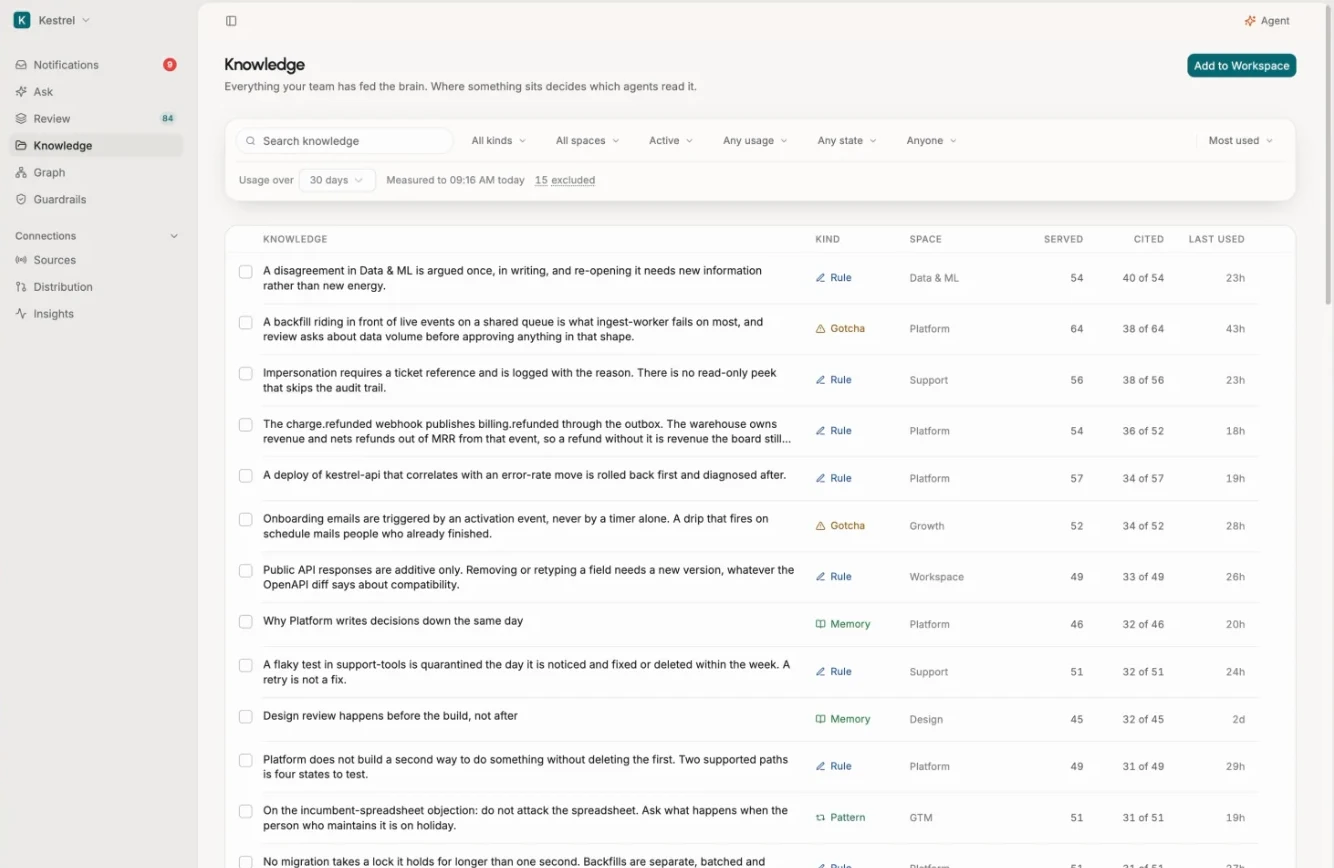
Claude CodeCodexCursorGitHubSlackLinearNotionJira5:43 of the real product: sources arriving, a rule held for review, an agent given the rules before it writes, and the count at the end.
It arrives by email. A press, not a sign-up.
Your team settles it in a Slack thread or a review. The agent writing today's code was in neither, so a reviewer types it out again.
What teams use Harbor for, across the engineering week.
The conventions your team settled on reach every session before it writes a line.
A billing change gets the billing rules. The rest of the rulebook stays out of the prompt.
Claude Code, Cursor and Codex start from the same rules, so switching agents changes nothing.
One command wires your agents. Connect the places your team decides, read only.
Missing a tool your team uses? Tell us which one
Add retries to the billing webhook. Harbor serves two rules: Every webhook handler is idempotent on the event id. Billing caps us at 60 rpm. Batch the retries.
A CLAUDE.md gives every agent everything and hopes it reads the right line. Harbor reads the task first, then serves only the rules that apply.
Outside evidenceOver 138 tasks, a hand-written context file moved task success 2.4 points, not a significant gain, and cost about 20% more to run. ETH Zürich and LogicStar, arXiv:2602.11988
Harbor counts the rules each session was given and the ones its answers cited. What gets in, and which commands run, stays your call.
Which rules agents were given, which ones their answers cited, and which ones your code outgrew. A rule nobody cites is one you retire with evidence.
Harbor reads where your team decides and writes only its own files. Nothing it sees trains a model.
Harbor reads the channels, repos and docs you connect, and changes nothing in them.
It reads under a credential you issue, and you can revoke it at any time.
Your prompts, content and knowledge graph are not used to train AI models, by us or any provider.
On your machines it writes whole files at its own paths, and never edits your CLAUDE.md or AGENTS.md.
Harbor is in early access, and we let teams in by hand. Leave an address below, or write to us, and the people who build it will answer. Write to us.
Once we let your team in, one command does it. It signs you in, finds Claude Code, Cursor and Codex on your machine and wires each one with hooks and the MCP server. Run it again any time, and harbor doctor tells you if something is not working. In CI, a token stands in for the sign-in. Read the quickstart.
A CLAUDE.md holds what somebody wrote, and every agent gets all of it. A memory server keeps what an agent chose to save. Harbor learns from where your team decides, gives each session only the rules that apply, lets you choose what waits for a person, and counts which rules got used. Harbor beside Mem0, Zep and others.
A new rule that contradicts an old one waits for a person in every mode, shown beside the rule it would replace. When a push deletes a file a rule names, Harbor retires that rule on its own if it belongs to one repo, and flags it as out of date if it reaches more. And a rule agents are given but never cite is marked in Insights, so you can retire it with evidence. What Harbor counts.
Free costs nothing for your whole team, on one source. Pro is $24 per person a month billed yearly, or $30 monthly, and Premium is $36, or $45. Asking is never metered on any plan. See the plans.
Nothing to migrate and nothing to write. Two weeks in, you see which rules your agents were given and which ones they cited. Leave an address and the people who build it will be in touch.